
Using Sentiment on Stocktwits
Understand shifts in market conviction with Stocktwits Sentiment. Learn how we track community signals to summarize bullish or bearish retail investor opinions.
Articles
- Understanding Message Volume on Stocktwits
- Using Sentiment on Stocktwits
- What do the bullish and bearish buttons do?
- How do I post on Stocktwits?
- My account was suspended. What should I do?
- How do I delete a message?
- How do I follow someone on Stocktwits?
- How do I stream messages in real-time?
- Understanding Watchers on Stocktwits
- I’m not receiving push notifications.
- How do I sort my watchlist?
- How to Change Your Email Address
- How do I reset my password?
- Why can't I post on Stocktwits?
- How do I unblock someone?
- How do I report a user?
- How do I delete my account?
- How do I filter my stream?
- I’m not receiving the password reset email.
- Where can I see Stocktiwts' Privacy Policy and Terms of Use?
- How do I block someone?
- Why doesn’t Stocktwits support OTC stocks?
- How do I add a chart or image to the Stocktwits stream?
- How do I get a verified account?
- Why can’t I view someone’s profile?
What is Sentiment?
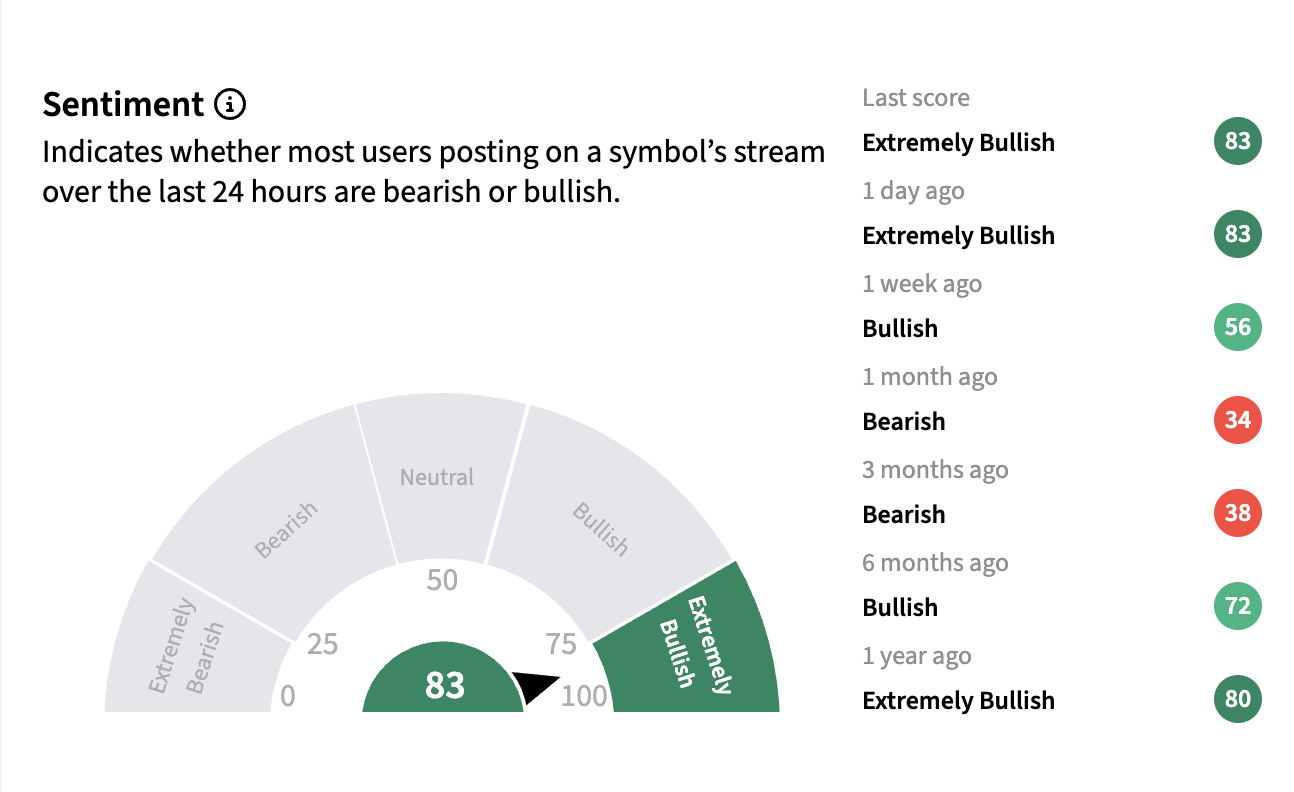
Stocktwits Sentiment helps you understand whether the community is becoming more bullish or bearish on a symbol.
Rather than reading hundreds of posts, Sentiment summarizes how community conviction is changing over time, helping you quickly understand shifts in retail opinion around stocks, ETFs, crypto, and private companies.
See It In Action
Case Study: Tesla ($TSLA)
In early March, Stocktwits Sentiment on Tesla turned increasingly bullish while shares were still recovering from their lows. Over the following weeks, Tesla rallied as community conviction continued strengthening.
Later, Sentiment began deteriorating even as Tesla traded near its highs. Shortly afterward, the stock entered a meaningful pullback.
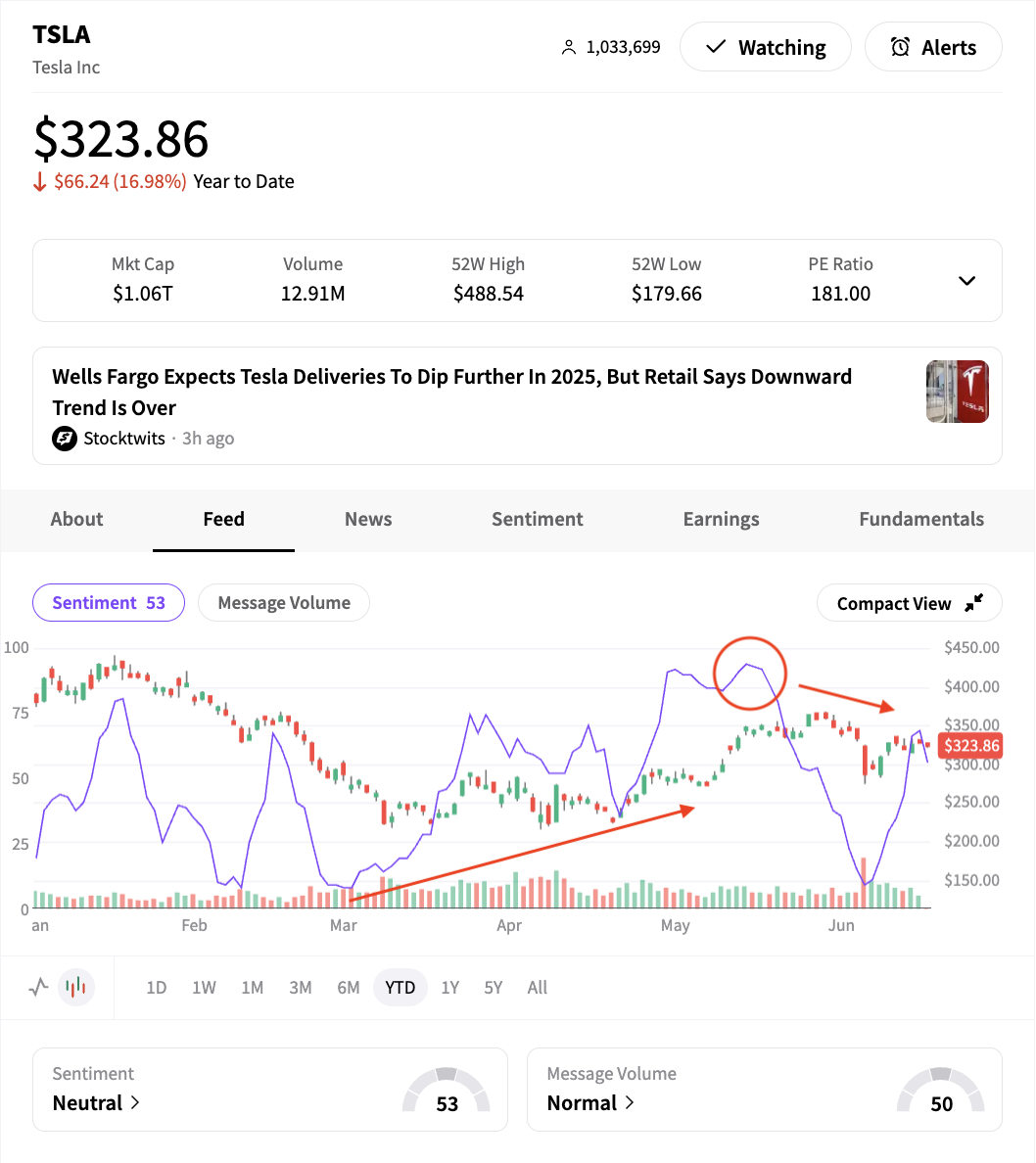
This example shows how changes in Sentiment can provide context beyond price action alone. Rather than focusing only on where a stock is trading, Sentiment helps you understand whether community conviction is strengthening or weakening.
Like any market indicator, Sentiment isn’t designed to predict future price movements. Instead, it helps you understand how community conviction changes as new information enters the market.
Key takeaway: Changes in Sentiment can highlight strengthening or weakening community conviction, even when price hasn’t materially changed.
Why Sentiment Matters
Investor conviction can change quickly around earnings, breaking news, analyst ratings, and other market-moving events. Tracking Sentiment helps you understand how the Stocktwits community is responding as new information emerges.
Sentiment can help you:
Track changes in community conviction.
Monitor reactions to earnings, news, and market events.
Compare community sentiment alongside price action.
Understand how retail investors are responding to a symbol.
How is Sentiment Calculated?
Sentiment combines multiple community signals into a single score that reflects how bullish or bearish the Stocktwits community is on a symbol.
These signals include:
Bullish and Bearish message sentiment tags
Community engagement, such as likes and replies
Overall discussion activity
Recent activity carries more weight than older activity, allowing Sentiment to reflect what the community is thinking today rather than averaging weeks of historical conversation.
Sentiment is not a simple count of Bullish versus Bearish message tags. Instead, it combines multiple community signals to provide a more complete view of community conviction.
Sentiment is derived entirely from public community activity. It does not use price movement, account holdings, order flow, or private trading data.
How Should I Use Sentiment?
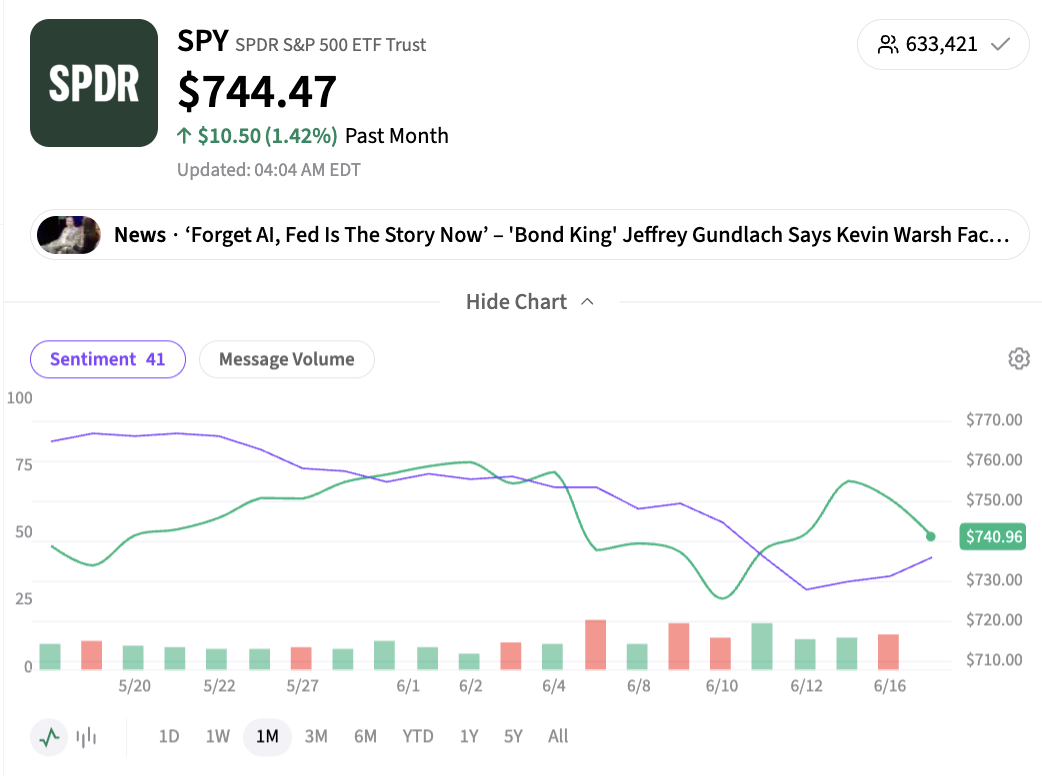
Sentiment works best alongside price action, news, and your own research.
It’s designed to help you understand whether community conviction is strengthening or weakening, not to predict future price movements.
What’s Available at Each Access Level
Some Sentiment data is available to everyone, while more detailed views are part of Stocktwits’ registered and Edge subscriber experience.
Everyone (including signed-out visitors): Can see the latest Sentiment score on supported symbol pages.
Registered users: Can see the latest Sentiment score, the previous day’s Sentiment score, and access the Sentiment chart overlay on the 1-day chart timeframe.
Edge subscribers: Get full access to historical Sentiment data and the Sentiment chart overlay across all chart timeframes, in addition to everything available to registered users.
If you come across a locked or gated Sentiment feature, signing up for a free account or upgrading to Edge will unlock it.